Last night I decided to watch the documentary I Escaped A Cult. When I hear the word cult, I immediately think of devil worshiping and animal sacrifices. However, that is not what these cults were, if fact, they were founded in Christianity instead of devil worship. The documentary interviews three individuals about life before and after escaping a cult, two being mother and daughter.
The film begins with an interview of Brent Jeffs, a former Fundamental Church of Jesus Christ of Ladder Day Saints (FLDS) member. He tells of how his uncle and the cult prophet, Warren Jeffs, sexually abused him as a young child and how he felt he had no where to turn. Warren had instilled in him the fear that he would burn in hell if he ever spoke a word of the abuse to anyone. His overwhelming fear of God prevented him from saying anything for a long time, but today he has a book out, Lost Boy, describing his life in the cult with more detail.
The second story is told by Maura Shmierer and her daughter, both of whom were part of the Aggressive Christianity Missions Training Corps (ACMTC) cult. The ACMTC was "God's army" and the leaders, Lila and James Green, believed strongly in physical abuse to create obedient followers. The sad thing is, the members abused their own children because the leaders said so because God spoke through them and wanted this.
Both of these cults relied on their member's fear of God to establish control over them. It's crazy to think how controlling an individual's fear can be, but these stories are proof that fear is a great controlling mechanism and the leaders of these cults knew that.
What do you think? Could the fear of God force you to abuse your own children or keep you from confiding in anyone the hell that you are going through internally as well as physically?
Sunday, March 15, 2015
Friday, March 13, 2015
Tiny Living
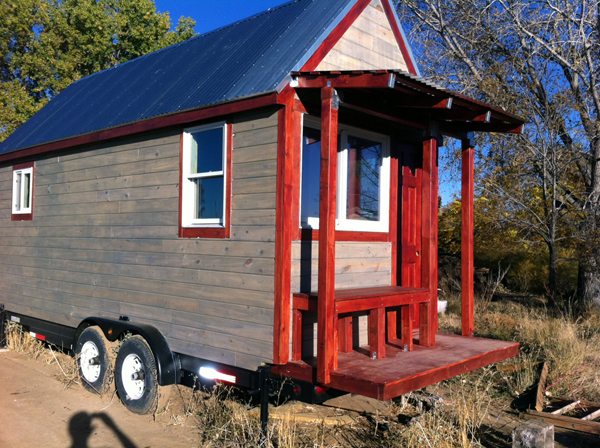
Imagine living in a house that is half the size of the average college dorm room; including shower, toilet, sink, and small stove. I for one cannot imagine such a lifestyle, but one man decided to try it out for himself.
In Tiny: A Story About Living Small, Christopher Smith sets out on a mission to build his very own tiny house in the hopes of finally establishing a home. He starts the process with the mind set that this will be a quick build only taking a few months. A few months slowly turned into a year and more money than I think he initially thought. The movie follows Christopher and his girlfriend and also contains interviews with a couple other tiny house owners.
I first heard of tiny houses on the TV show Tiny House Nation, and I was intrigued by the idea of such small living conditions. It's amazing what one can do with 200 square feet. The people building these tiny homes are very creative and good at manipulating the space in a way so that it doesn't feel, or even look in some cases, cramped.
Although tiny houses is often defined as having 200 square feet or less, the range of small houses can range from 140 to 4,000 square feet. For more details about living small or tiny, you can look at the Small House Society whose mission it is to promote awareness of the benefits of living in smaller homes.
Leave a comment below letting me know what you think about living tiny. Would you do it? Do you think you could do it?
In Tiny: A Story About Living Small, Christopher Smith sets out on a mission to build his very own tiny house in the hopes of finally establishing a home. He starts the process with the mind set that this will be a quick build only taking a few months. A few months slowly turned into a year and more money than I think he initially thought. The movie follows Christopher and his girlfriend and also contains interviews with a couple other tiny house owners.
I first heard of tiny houses on the TV show Tiny House Nation, and I was intrigued by the idea of such small living conditions. It's amazing what one can do with 200 square feet. The people building these tiny homes are very creative and good at manipulating the space in a way so that it doesn't feel, or even look in some cases, cramped.
Although tiny houses is often defined as having 200 square feet or less, the range of small houses can range from 140 to 4,000 square feet. For more details about living small or tiny, you can look at the Small House Society whose mission it is to promote awareness of the benefits of living in smaller homes.
Leave a comment below letting me know what you think about living tiny. Would you do it? Do you think you could do it?
Friday, March 6, 2015
What is Plastic Paradise?
Have you ever heard of Plastic Paradise? It's a supposed island that's twice the size of Texas and made of plastic garbage that has accumulated in the Pacific Ocean. I had never heard of such a thing until I watched Plastic Paradise: The Great Pacific Garbage Patch.
Apparently, this "paradise" is a real thing. It's located on a small island halfway between the east coast of Japan and the west coast of the United States and is property of the Unites States government. How could an island, overrun with trash, have never been heard of before this documentary? Below is the trailer for Plastic Paradise: The Great Pacific Garbage Patch; warning, there is a small scene of a dissected bird.
As you can see from the video above, the amount of plastic we use and what we do with it is out of control. Do you drink from plastic water bottles regularly? After you drink it and dispose of it, you have no way of knowing where that plastic bottle is going. All that seems to be for sure is that it's harming the environment in some way, shape, or form because plastic cannot be broken down completely. It can only be broken down into smaller pieces which are more likely to be eaten by and harm animals. The Environmental Cleanup Coalition is working to clean up our world's oceans in an effort to preserve marine wildlife. However, it is going to take a lot more to clean up the earth.
The most efficient way to clean up the plastic problem is to stop it at its core. As long as plastic products are continuing to be produced, the problem is only going to increase, and we may see more and more animal species disappear because of it. Below is a picture of a fish that was filleted and found to have plastic in it's stomach.
It's a disturbing thought that even the fish, a common food choice by many individuals, are ingesting small pieces of plastics. This is especially scary when you consider the carcinogens within plastics that are now throughout the fish you had intended to eat for dinner. The Mayo Clinic advises that people should stay away from products that could possibly contain BPA, a common carcinogen found in plastics.
What do you think? Is it worth trying to encourage the plastic companies to stop producing plastic and find a more Eco-friendly product? Or is it a waste of time considering the dependence the human society has on plastic items?
Subscribe to:
Comments (Atom)